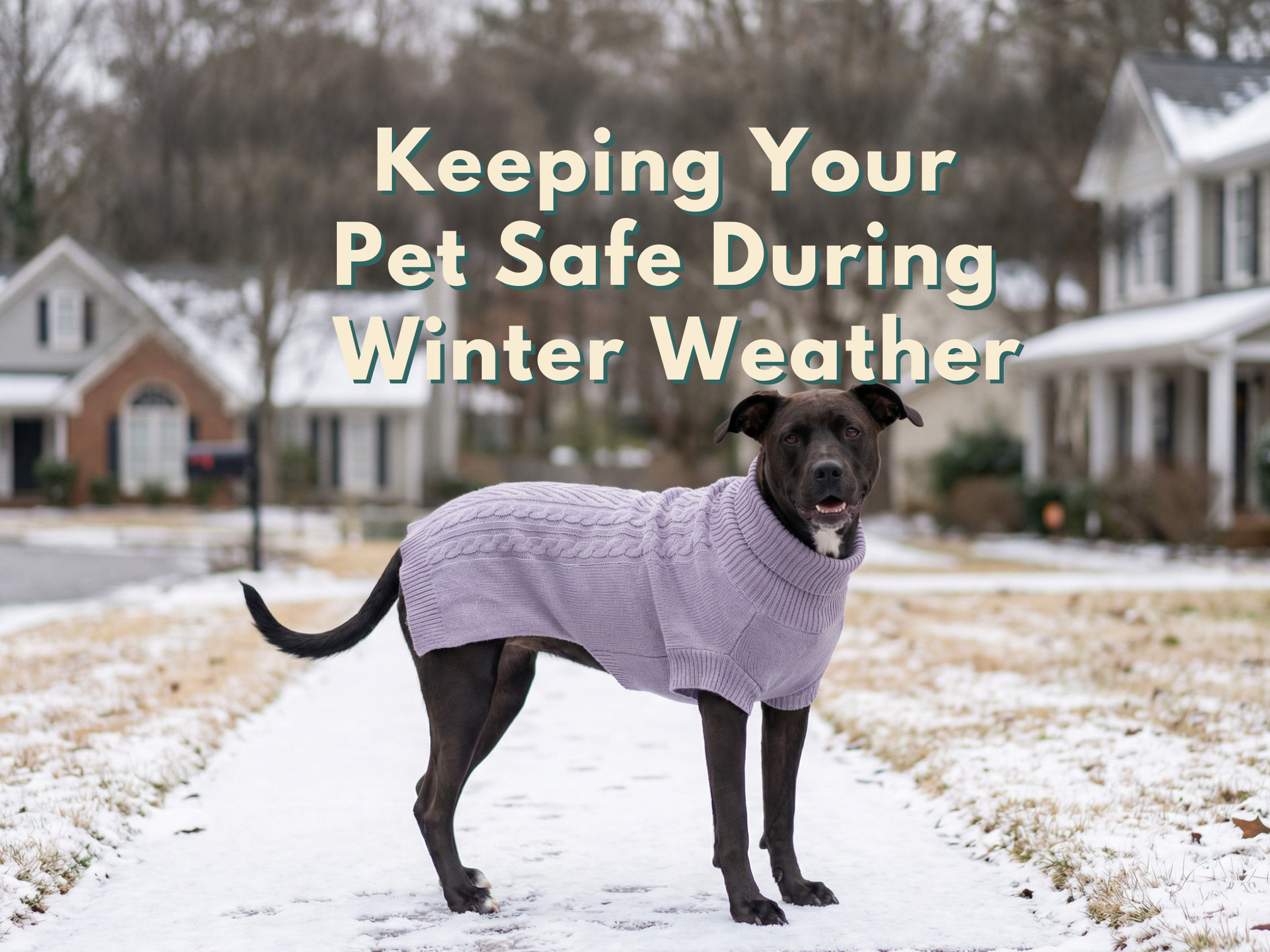
Ice & Snow Safety
Ice and snow aren’t just inconvenient, they can be downright dangerous.
Watch those paws
-
Ice can cause slips, sprains, and cuts.
-
Salt and ice melt products can irritate paw pads or be toxic if licked.
-
After walks, wipe paws with a warm, damp cloth to remove salt and chemicals.
Shorten outdoor time
-
Even cold-tolerant dogs can lose body heat quickly.
-
Stick to shorter, more frequent walks during extreme cold.
-
If it’s too icy for you to walk comfortably, it’s probably unsafe for your pet too.
Consider paw protection
-
Dog boots or paw balm can help prevent cracking and chemical burns.
-
Start slow, boots take practice (and patience 😄).
Extreme Cold: When It’s Just Too Much
Cold weather affects pets differently depending on size, age, and health.
Who’s most at risk?
-
Puppies and senior pets
-
Small, short-haired, or low-body-fat breeds
-
Pets with arthritis, diabetes, heart, or kidney conditions
Signs your pet is too cold
-
Shivering or trembling
-
Lifting paws off the ground
-
Whining, anxiety, or slowing down
-
Cold ears, tail, or paws
If you notice these signs, head indoors right away.
Indoor Winter Safety
Winter hazards don’t stop at the front door.
Heaters & fireplaces
-
Keep pets at a safe distance from space heaters and open flames.
-
Use screens or barriers around fireplaces.
Warm but breathable bedding
-
Draft-free sleeping areas are key.
-
Elevated beds or extra blankets help retain warmth (especially for older pets).
Hydration matters
-
Heated indoor air can be very drying.
-
Make sure fresh water is always available, and not frozen for outdoor pets.
Cold Cars Are Still Dangerous
Just like summer, winter cars can be unsafe.
-
Cars can become dangerously cold in minutes.
-
Pets can suffer from hypothermia just as quickly as heatstroke.
-
If you’re cold in the car, your pet definitely is.
When in doubt: bring them with you or leave them safely at home.
Be Prepared for Winter Emergencies
Storms and power outages happen, being ready helps everyone stay calm.
Winter pet emergency kit essentials
-
Extra food and water (3–5 days)
-
Medications and vet contact info
-
Blankets or towels
-
Paw wipes and pet-safe ice melt
-
Leash, harness, or carrier (easy grab-and-go)
A Final Thought
Winter doesn’t have to slow things down, it just means adjusting how we care for our pets. A little awareness, a little prep, and a lot of love keep tails wagging and whiskers twitching all season long.
If you ever need help caring for your pet during cold weather, especially travel, storms, or long workdays, Snout & About Pet Care is always here to help. 🐾❄️
Stay warm, stay safe, and give those paws an extra cuddle.
Comments (0)
No comments yet. Be the first to share your thoughts!
Leave a Comment